PMTA Joins Coalition in Philadelphia to Highlight Hidden Costs of Lawsuit Abuse

PMTA Joins Coalition in Philadelphia to Highlight Hidden Costs of Lawsuit Abuse
Venue shopping, rising liability costs and nuclear verdicts are putting pressure on Pennsylvania businesses and adding to the cost of everyday goods and services.
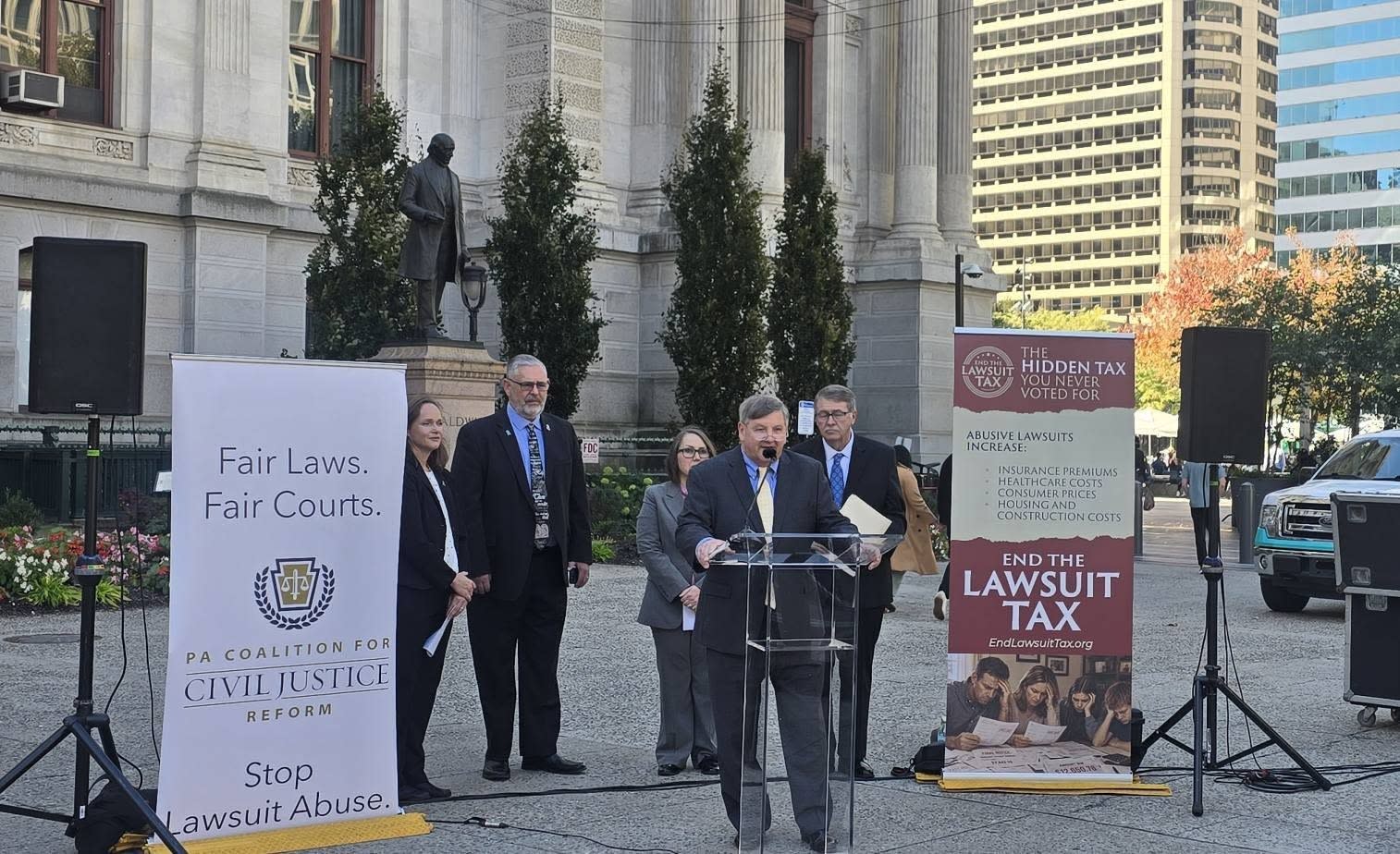
The Pennsylvania Motor Truck Association (PMTA) joined business, health care and civil justice advocates at a press conference outside Philadelphia City Hall on October 8 to call attention to the growing economic consequences of lawsuit abuse and the need for fairer rules governing where civil lawsuits are heard.
The event, organized by End the Lawsuit Tax and the Pennsylvania Coalition for Civil Justice Reform (PCCJR), brought together representatives of the trucking and medical communities, along with state Sen. Cris Dush, to explain how venue shopping and increasingly large jury verdicts affect businesses, workers, and consumers throughout Pennsylvania.
According to a 2024 study by the U.S. Chamber of Commerce Institute for Legal Reform, Pennsylvania's civil liability system costs an estimated $19.5 billion annually, equivalent to $3,752 per household. Those costs include claims, litigation and compensation paid through the civil justice system, with economic consequences extending well beyond the parties involved in lawsuits.
“Every Pennsylvania family pays $3,752 per year caused by the hidden costs associated with lawsuit abuse in Pennsylvania,” said Bill Gillmeister of End the Lawsuit Tax. “Shopping for a court to get the highest damage award is part of that $3,752.”
Why Venue Matters
Venue shopping occurs when attorneys seek to file lawsuits in courts known for particularly large jury awards, even when the underlying dispute has little connection to that location.
PCCJR highlighted Philadelphia's concentration of so-called nuclear verdicts, generally defined as jury awards of $10 million or more.
According to the coalition's review, Pennsylvania recorded 42 nuclear verdicts between June 2021 and May 2026. Of those, 29 — nearly seven in ten — came from Philadelphia.
PCCJR Executive Director Curt Schroder emphasized that civil cases should be heard in counties with a genuine connection to the dispute, rather than locations selected primarily because of their history of large verdicts.
“Attorneys' pursuit of the highest possible verdict cannot come at the expense of judicial fairness,” Schroder said. “Venue may be a procedural rule, but it has real policy consequences.”
The coalition pointed to cases involving accidents or injuries elsewhere in Pennsylvania that were nevertheless filed in Philadelphia, including a catastrophic bus crash in Westmoreland County. In that case, the Pennsylvania Supreme Court ultimately ordered the lawsuits transferred back to western Pennsylvania, but only after years of litigation over where the claims should be heard.
The Impact on Pennsylvania Trucking
PMTA President and CEO Rebecca Oyler focused on how rising litigation and liability costs work their way through the freight supply chain and ultimately affect the prices Pennsylvania consumers pay.
“Before that gallon of milk, box of cereal, or package of Tastykakes ever reaches the shelf, there's an entire supply chain behind it,” Oyler explained. “Raw materials and ingredients have to get to manufacturers and processors. Packaging has to be delivered. Finished products have to reach warehouses and distribution centers. And ultimately, those products have to get to the store.”
Nearly every step of that supply chain involves a truck.
Pennsylvania is home to more than 72,000 trucking companies, the overwhelming majority of which are small businesses operating on thin margins. Rising insurance and litigation expenses reduce the money those businesses can invest in employees, equipment, safety technology and future growth.
Oyler pointed to recent trucking industry research showing that, from 2021 to 2024, liability claim costs increased 33 percent even as heavy-truck crash rates declined. Over the same period, liability insurance premiums increased nearly 19 percent per mile.
Some of Pennsylvania's safest trucking companies, including carriers with award-winning safety records and significant investments in crash-prevention technology, continue to experience double-digit insurance increases.
The growing cost of claims, litigation and large verdicts contributes to an increasingly expensive liability environment, even for companies that have invested heavily in protecting the motoring public.
For smaller carriers, the consequences can be particularly severe. A single lawsuit can threaten a family-owned trucking company that has operated in a community for generations. When that happens, the effects extend beyond the business owner to employees, local communities, and the freight network.
And when transportation costs rise, those expenses eventually become part of the price of everyday goods.
Oyler also cited a 2025 economic study finding that targeted reforms bringing commercial-auto liability costs in higher-cost states closer to those in lower-cost states could reduce expected grocery-price inflation by as much as 15 percent over ten years.
Health Care Faces Similar Pressures
The Pennsylvania Medical Society highlighted the consequences of venue shopping and rising medical malpractice costs for physicians and patients.
Dr. Tecla Brabazon described how rising malpractice insurance premiums can make Pennsylvania a less attractive place for physicians to practice, potentially affecting access to care.
“High malpractice premiums cause physicians to find employment elsewhere, in states that offer more protections for the physicians practicing there,” Brabazon said.
PCCJR also pointed to a sharp increase in medical liability lawsuits filed in Philadelphia following changes to Pennsylvania's venue rules. Filings increased from 275 in 2022 to 616 in both 2024 and 2025.
A Legislative Response
Sen. Cris Dush discussed Senate Bill 125, a proposed constitutional amendment intended to give the General Assembly greater authority to establish rules governing where civil lawsuits may be filed.
The proposal is aimed at addressing venue shopping and creating a more consistent legal framework for civil cases across Pennsylvania.
PCCJR is calling for neutral venue standards that connect lawsuits to the counties where the underlying events occurred or where the dispute otherwise has a genuine connection.
The coalition emphasized that these reforms are not intended to deny injured people access to the courts or fair compensation, but to ensure fairness for all parties.
The Cost Ultimately Reaches Pennsylvania Families
For PMTA, the issue extends well beyond the courtroom.
Rising litigation and liability costs affect whether trucking companies can afford to hire employees, improve benefits, replace equipment and invest in safety. They also affect the cost of moving freight and, ultimately, the price of the goods and services Pennsylvania families rely on every day.
The association believes businesses should be held accountable when they cause harm, and injured people should receive fair compensation. At the same time, the civil justice system should provide a fair and predictable legal environment without encouraging excessive litigation or awards that go far beyond reasonable compensation.
As Oyler emphasized in closing her remarks:
“Businesses and insurance companies may write the checks, but ultimately, Pennsylvanians pay the bill.”
To learn more about the impact of lawsuit abuse on trucking companies and their employees, visit StopLawsuitAbuse.info.